Capital Readiness
Build a Lender-Ready Business
Strengthen the compliance, cash flow, business credit, financial documentation, and operating credibility financial institutions evaluate.
Two Education Tracks. One Commitment to Economic Opportunity.
FSBO Academy provides structured education that helps individuals strengthen their financial wellness and prepares businesses for more productive engagement with banks, credit unions, CDFIs, and other responsible capital providers.
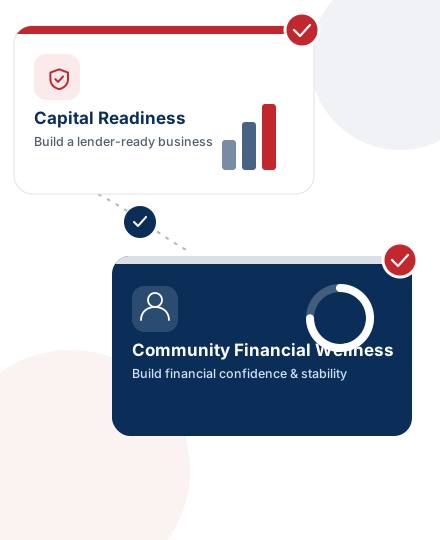
Strengthen the compliance, cash flow, business credit, financial documentation, and operating credibility financial institutions evaluate.
Develop practical skills in budgeting, savings, credit, debt management, banking, and personal financial planning.
Programs
Outcome:
A more compliant, financially documented, creditworthy, bankable, and capital-ready business.
Outcome:
An individual with stronger financial knowledge, habits, confidence, planning skills, and financial stability.
Each track maintains separate curricula, assessments, participant requirements, program budgets, performance measures, completion credentials, and impact reporting.
Capital Readiness · Flagship specialization
Capital access begins before a business submits an application. FSBO Academy helps entrepreneurs strengthen the underlying compliance, cash flow, business credit, and financial documentation required for credible banking relationships.
Build and maintain the legal, administrative, and operational credibility financial institutions expect.
Understand, document, and strengthen the financial activity that demonstrates sustainability and repayment capacity.
Establish and manage credible commercial credit profiles, reporting relationships, and responsible credit practices.
Build the financial foundation required to operate a credible and sustainable business.
Establish and strengthen business compliance, commercial credit profiles, reporting relationships, and responsible business-credit practices.
Prepare an established business for more productive engagement with banks, credit unions, CDFIs, and other responsible capital providers.
Help qualified businesses organize their documentation and prepare for responsible conversations with financial institutions.
Business Financial Literacy then Business Credit Procedures then Lender Readiness then Banking and Capital Opportunities
Help colleges and universities prepare student-owned businesses to establish compliance, business credit, financial records, and banking relationships before graduation.
Program participation and completion do not guarantee financing, credit approval, grants, or other financial products.
Community Financial Wellness
FSBO Academy partners with nonprofit organizations, workforce-development programs, employers, municipalities, and community institutions to help individuals build the knowledge, confidence, and practical habits needed for greater financial stability.
The featured program is the FSBO Financial Literacy Cohort™.
Understand where each participant is starting.
Instructor-led modules on personal financial topics.
Practical exercises that put new knowledge to work.
Build habits and a Personal Financial Action Plan.
Institutional partnerships
Partners may support either track or both, with separate objectives, participants, budgets, outcomes, and reporting.
Programs may support applicable CRA, community-development, financial-education, or small-business objectives depending on the institution, geography, participants, activity structure, documentation, and applicable regulatory requirements.
Impact frameworks
Each track is measured separately. No figures are published until verified results are supplied and approved.
Business capital-readiness measures
Personal financial-wellness measures
Delivery model
Identify the partner’s population, objectives, service area, desired outcomes, and reporting requirements.
Select the appropriate Capital Readiness or Community Financial Wellness program and customize delivery without compromising curriculum standards.
Provide structured instruction, assessments, technical assistance, participant materials, and program support.
Measure participation, completion, learning progress, action-plan development, and track-specific outcomes.
Whether your goal is to prepare businesses for responsible access to capital or help individuals build greater financial stability, FSBO Academy provides a structured, measurable educational solution.